The Insulation Guy offers 13 types of industrial pipe insulation with various jacketed and unjacketed options, rated for temperatures as low as -300°F to as high as +2300°F.
By offering a range of cold and high temp insulation, we can stay on top of industry demands and help your business. Explore fiberglass pipe insulation, fitted pipe jackets, custom insulation shapes, and more - all available to ship to anywhere in the United States!
Industrial pipe insulation for extreme temperatures (-300F to 2300F). Improves energy efficiency, moisture control, and safety precautions.
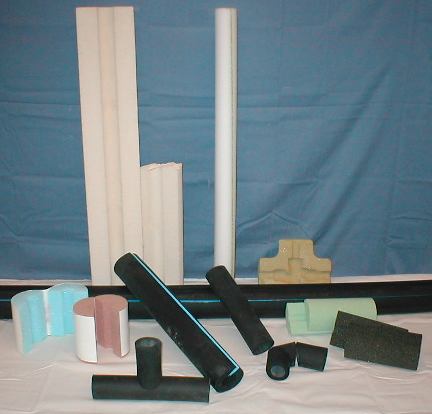
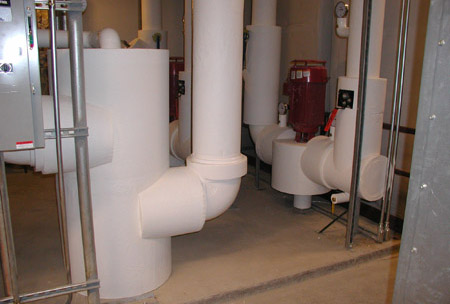
Fitted pipe insulation shapes are perfect for encasing straight pipes, curves, or joints that require special attention. Engineered shapes to 22" I.D. can be flexible or rigid, with an R Value from 2.63 to 7.5 per inch.
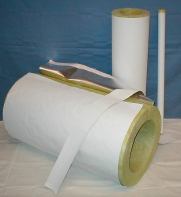
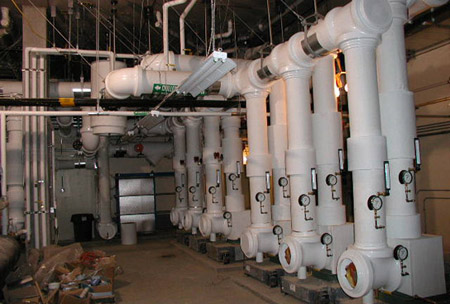
Maintain a clean and visibly appealing facility by choosing pipe insulation with a traditional all-service jacket (ASJ). This insulation comes in 5/8" I.D. to 34", 0° to +850°, with thicknesses that range from 1/2" to 4".
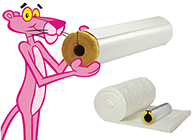
The all-new ASJ Max FiberglasTM Pipe Insulation is designed to keep your facility safe while saving you money on heating and cooling costs. Fiberglass insulation is durable and long-lasting in extreme conditions.
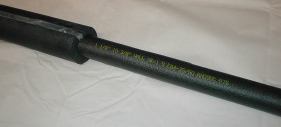
Flexible foams insulate temperatures from -40° to +300°F. Available are nine types of UV and non-UV types in sizes from 3/8" ID. to 16" and thicknesses up to 4". For use in all applications from plumbing to aerospace.
Thermal insulation is designed to retard extreme temperatures (hot or cold) to help save on heating and cooling costs, reduce condensation, and act as a safeguard against onsite injuries. Thermal pipe insulation may be made of either natural or manufactured materials, depending on its intended application.
Choose from rugged, high-performance insulation materials such as fiberglass or closed-cell rubber foam for a host of applications, including:
.png)


Owens Corning SSL II® with ASJ Max Fiberglas™ Pipe Insulation
SSL II with ASJ Max — Physical Properties
| Property | Test Method | Value |
|---|---|---|
| Density (size dependent) | ASTM C302 | 3.5 to 5.5 pcf |
| Operating Temperature Range1 | ASTM C411 | 0°F to 1,000°F (−18°C to 538°C) |
| Water Vapor Sorption | ASTM C1104 | Less than 5% by weight |
| Jacket Temperature Limitation | ASTM C1136 | −20°F to 150°F (−29°C to 66°C) |
| Jacket Permeance | ASTM E96, Proc. A | 0.01 perm |
| Burst Strength, min | ASTM D774/D774M | 100 psi |
|
1 With heat-up schedule when operating temperatures are between 850°F and 1,000°F. |
||
| Property | Test Method | Value |
|---|---|---|
| Corrosion Resistance | ||
| Corrosion to Steel | ASTM C1617 | Meets Requirements |
| Stress Corrosion Evaluation on External Stress Corrosion Cracking Tendency of Austenitic Stainless Steel | ASTM C795 and ASTM C6922 | Meets Requirements |
| Chemical Analysis for Cl−, Fl−, Na+, SiO3 | ASTM C795 and ASTM C8712 | Results fall within acceptability limits |
| Fire | ||
| Composite Surface Burning Characteristics3 | UL 723, ASTM E84, or CAN/ULC-S102 | Flame Spread 25 Smoke Developed 50 |
|
2 Preproduction qualification testing complete and on file. Chemical analysis of each production lot required for total conformance; certification must be specified at time of order. |
||
| Mean Temperature (°F) | k (Btu·in/hr·ft2·°F) |
|---|---|
| 50 | 0.22 |
| 75 | 0.23 |
| 100 | 0.24 |
| 150 | 0.27 |
| 200 | 0.29 |
| 250 | 0.32 |
| 300 | 0.35 |
| 350 | 0.39 |
| 400 | 0.43 |
| 450 | 0.48 |
| 500 | 0.54 |
| Apparent thermal conductivity per ASTM C1045 with data obtained by ASTM C335. Values are nominal, subject to normal testing and manufacturing tolerances. | |
| Mean Temperature (°C) | λ (W/m·°C) |
|---|---|
| 10 | 0.032 |
| 25 | 0.034 |
| 50 | 0.037 |
| 100 | 0.043 |
| 125 | 0.047 |
| 150 | 0.051 |
| 175 | 0.056 |
| 200 | 0.062 |
| 225 | 0.068 |
| 250 | 0.075 |
| 275 | 0.082 |
| Ambient Temperature | Relative Humidity | System Operating Temperature | ||
|---|---|---|---|---|
| 35°F (2°C) | 45°F (7°C) | 55°F (13°C) | ||
| 110°F (43°C) | 70% | 1" (25) | 1" (25) | 1" (25) |
| 80% | 1½" (38) | 1½" (38) | 1½" (38) | |
| 90% | 3½" (89) | 3½" (89) | 3" (76) | |
| 100°F (38°C) | 70% | 1" (25) | 1" (25) | 1" (25) |
| 80% | 1½" (38) | 1½" (38) | 1" (25) | |
| 90% | 3½" (89) | 3" (76) | 2½" (64) | |
| 90°F (32°C) | 70% | 1" (25) | 1" (25) | 1" (25) |
| 80% | 1½" (38) | 1" (25) | 1" (25) | |
| 90% | 3½" (89) | 3" (76) | 2½" (64) | |
| 80°F (27°C) | 80% | 1½" (38) | 1" (25) | 1" (25) |
| 90% | 3" (76) | 2½" (64) | 2" (51) | |
| 70°F (21°C) | 80% | 1" (25) | 1" (25) | 1" (25) |
| 90% | 2½" (64) | 2" (51) | 1" (25) | |
| Thickness in inches, millimetres in parentheses. Calculations estimated using NAIMA 3E Plus v4.0. Fixed design conditions: steel horizontal piping, 16″ NPS, 0 mph wind speed, outer surface jacket emittance 0.9. Thermal conductivity values used are subject to normal manufacturing tolerances. | ||||
| Frequency (Hz) | At 1" Thickness (dB) | At 2" Thickness (dB) |
|---|---|---|
| 315 | −3 | −2 |
| 400 | 2 | 0 |
| 500 | 1 | 0 |
| 630 | 3 | 1 |
| 800 | 0 | −3 |
| 1000 | 6 | 8 |
| 1250 | 6 | 7 |
| 1600 | 10 | 13 |
| 2000 | 11 | 13 |
| 2500 | 16 | 20 |
| 3150 | 18 | 23 |
| 4000 | 19 | 23 |
| 5000 | 18 | 22 |
Armacell AP/ArmaFlex® + AP/ArmaFlex FS
| Range / Item Group | Min. °C | Min. °F | Max. °C | Max. °F |
|---|---|---|---|---|
| ⅜" through 1" walls (NBR/PVC-based) | −183 | −297 | 105 | 220 |
| 1½" and 2" walls (NBR/PVC-based) | −183 | −297 | 105 | 220 |
| 1½" and 2" walls (EPDM-based) | −183 | −297 | 149 | 300 |
| Full bonding sheet insulation: 82°C (180°F). Contact Armacell for applications beyond the recommended service temperature range. | ||||
| Mean Temperature Θm | 50°F (10°C) | 75°F (24°C) | 100°F (38°C) | 125°F (52°C) |
|---|---|---|---|---|
| Range 1 — ⅜" through 2" walls (NBR/PVC products) | ||||
| λd ≤ [W/(m·K)] | 0.034 | 0.0353 | 0.037 | 0.039 |
| k ≤ [Btu·in/(h·ft2·°F)] | 0.235 | 0.245 | 0.257 | 0.268 |
| Range 2 — 1½" and 2" walls (EPDM-based) | ||||
| λd ≤ [W/(m·K)] | 0.040 | 0.040 | 0.041 | 0.043 |
| k ≤ [Btu·in/(h·ft2·°F)] | 0.278 | 0.28 | 0.289 | 0.300 |
| Tube ID | ⅜" (10 mm) | ½" (13 mm) | ¾" (19 mm) | 1" (25 mm) | 1½" (38 mm) | 2" (50 mm) |
|---|---|---|---|---|---|---|
| ¼" (6 mm) | 2.8 | 3.8 | 6.4 | 8.3 | — | — |
| ⅜" (10 mm) | 2.8 | 3.3 | 5.9 | 7.3 | 13.7 | 19.7 |
| ½" (13 mm) | 2.6 | 3.3 | 5.5 | 7.2 | 12.7 | 18.2 |
| ⅝" (16 mm) | 2.6 | 3.4 | 5.6 | 7.2 | 12.0 | 17.2 |
| ¾" (19 mm) | 2.4 | 3.3 | 5.5 | 7.0 | 11.3 | 16.2 |
| ⅞" (22 mm) | 2.4 | 3.3 | 5.4 | 7.0 | 10.8 | 15.5 |
| 1⅛" (29 mm) | 2.3 | 3.3 | 5.4 | 7.2 | 10.1 | 14.5 |
| 1⅜" (35 mm) | 2.2 | 3.2 | 5.3 | 7.2 | 9.6 | 13.7 |
| 1⅝" (41 mm) | 2.5 | 3.2 | 5.1 | 7.2 | 9.2 | 13.1 |
| 1½" IPS (48 mm) | 2.4 | 3.1 | 4.9 | 6.9 | 8.7 | 12.4 |
| 2⅛" (54 mm) | 2.4 | 3.2 | 4.8 | 6.8 | 8.6 | 12.2 |
| 2" IPS (60 mm) | 2.4 | 3.2 | 5.2 | 7.1 | 8.8 | 12.3 |
| 2⅝" (67 mm) | 2.4 | 3.2 | 4.7 | 6.5 | 8.2 | 11.6 |
| 2½" IPS (73 mm) | 2.4 | 3.2 | 5.0 | 6.8 | 8.4 | 11.7 |
| 3⅛" (79 mm) | 2.4 | 3.2 | 4.6 | 6.3 | 7.9 | 11.1 |
| 3" IPS (89 mm) | 2.3 | 3.1 | 4.9 | 6.6 | 8.1 | 11.2 |
| 3⅝" (92 mm) | — | 3.1 | 4.5 | 6.2 | 7.7 | 10.7 |
| 4⅛" (105 mm) | — | 3.1 | 4.5 | 6.1 | 7.5 | 10.5 |
| 4" IPS (114 mm) | — | 3.0 | 4.8 | 6.4 | 7.8 | 10.7 |
| 5" IPS (141 mm) | — | 3.0 | 4.7 | 6.2 | 7.5 | 10.2 |
| 6" IPS (168 mm) | — | 3.0 | 4.6 | 6.1 | 7.3 | 9.9 |
| 8" IPS (219 mm) | — | 2.9 | 4.5 | 5.9 | 7.0 | 9.5 |
| 10" IPS (273 mm) | — | — | — | 5.8 | 6.8 | 9.2 |
| Column headings are wall thickness. Specifications are based on measurement methods employed by Armacell; other methods may not produce the same values. See Armacell technical bulletin #1 for details. | ||||||
| Wall Thickness | R-Value |
|---|---|
| ¼" (6 mm) | 1.0 |
| ⅜" (10 mm) | 1.5 |
| ½" (13 mm) | 2.1 |
| ¾" (19 mm) | 3.1 |
| 1" (25 mm) | 4.2 |
| 1½" (38 mm) | 6 |
| 2" (50 mm) | 8 |
| Property | Value / Assessment | Standard / Test Method |
|---|---|---|
| Surface burning characteristics | Flame Spread Index less than 25; Smoke Developed Index less than 50. Applies to AP/ArmaFlex tube insulation all thicknesses; AP/ArmaFlex FS sheet and roll through 2"; AP/ArmaFlex sheet and roll through 1". AP/ArmaFlex sheet and roll at 1½" and 2" are not 25/50 rated. | ASTM E84 and UL 723, CAN/ULC S1021 |
| FM approved | Up to 1½" insulation thickness for tubes; up to 1" for sheets | FM 49242 |
| UL94 5VA3 | Pass at 6 mm (¼") and thicker for AP/ArmaFlex Pass at 7.5 mm (0.30") and thicker for AP/ArmaFlex FS |
UL 94 |
| UL94 V-03 | Pass at 6 mm (¼") and thicker for AP/ArmaFlex Pass at 13 mm (½") and thicker for AP/ArmaFlex FS |
UL 94 |
| UL94 V-13 | Pass at 7.5 mm (0.30") and thicker for AP/ArmaFlex FS | UL 94 |
| Practical fire behavior | Self-extinguishing, does not drip, does not spread flames | UL 94 |
| 1 CAN/ULC S102 up to 1" thickness. 2 AP/ArmaFlex pipe insulation is FM Approved for ID sizes up to and including 4 IPS. 3 UL file number E535094. |
||
| Property | Value / Assessment | Standard / Test Method |
|---|---|---|
| Water vapor permeability | 0.05 perm-inch (0.725 × 10⁻¹³ kg/(s·m·Pa)) for NBR/PVC products 0.08 perm-inch (1.16 × 10⁻¹³ kg/(s·m·Pa)) for EPDM products |
ASTM E96, Procedure A |
| Water absorption | 0.2% by volume | ASTM C209, ASTM C1763 |
| Density | 3 to 6 lb/ft3 (48 to 96 kg/m3) | ASTM D1667 |
| Sound absorption average (SAA) | 1" (25 mm): 0.38 1.5" (38 mm): 0.49 2" (50 mm): 0.51 |
ASTM C4234 |
| Mold growth | Passed | UL 181 |
| Fungal growth | Passed | ASTM C1338, ASTM G21 |
| 4 Type A mounting. | ||
Aerocel® EPDM Tube & Sheet Insulation
| Property | Result | Test Method |
|---|---|---|
| Cell Structure | Closed Cell | — |
| Thermal Conductivity | 0.245 Btu·in/hr·ft2·°F | ASTM C518 / C177 |
| Service Temperature | −297°F to +257°F | ASTM C411 |
| U.V. Resistance | Pass | ASTM G7 / G90 |
| Ozone Resistance | No cracking | — |
| Water Vapor Permeability | 0.03 perm (4.38 × 10⁻¹¹) | ASTM E96 |
| Water Absorption (weight %) | 0.2% | ASTM C209 |
| Fire Safety Characteristics (through 2" thickness) |
25/50 flame spread / smoke developed UL-94 5V-A, V-O Self-extinguishing |
ASTM E84 |
| Corrosion of Stainless Steel | Non-corrosive | ASTM C692, DIN 1988 |
| Aerocel also conforms to: ASTM C534, NY City MEA #171-04-M, City of LA RR-8413, UL 181 Section 13 Mold Growth/Humidity, ASTM G21 Fungal Resistance, UL 181 Section 18 Air Erosion, NFPA 90A & 90B, MIL-15280J. Meets IECC and ASHRAE energy code requirements for R-4 refrigeration piping at 1" wall thickness. | ||
| Operating Temperature | <1" ID | 1" ID to <1½" ID | 1½" ID to <4" ID | 4" ID to <8" ID | ≥8" ID |
|---|---|---|---|---|---|
| Space Heating (insulation thickness, inches) | |||||
| 201°F – 250°F | 1½" | 1½" | 2" | 2" | 2" |
| 141°F – 200°F | 1" | 1" | 1" | 1½" | 1½" |
| 105°F – 140°F | ½" | ½" | 1" | 1" | 1" |
| Service Water Heating (insulation thickness, inches) | |||||
| 105°F and above | ½" | ½" | 1" | 1" | 1" |
| Cooling Systems (insulation thickness, inches) | |||||
| 40°F – 60°F | ½" | ½" | 1" | 1" | 1" |
| ≤40°F | ½" | 1" | 1" | 1" | 1½" |
| Insulation Thickness | Pipe Operating Temperature — Pipe Outside Diameters | |||
|---|---|---|---|---|
| 50°F | 38°F | 0°F | −20°F | |
| Design conditions — 85°F, 70% RH, low air movement | ||||
| ¼" | ⅜" – 1" | — | — | — |
| ⅜" | ¾" – 6" | ⅜" – ¾" | — | — |
| ½" | — | ⅞" – 6" | — | — |
| ¾" | — | — | ⅜" – 1½" | ⅜" – ½" |
| 1" | — | — | 1⅝" – 6" | ¾" – 2½" |
| 1¼" | — | — | — | 2⅝" – 6" |
| Design conditions — 80°F, 50% RH, low air movement | ||||
| ¼" | ⅜" – 6" | ⅜" – 6" | — | — |
| ⅜" | — | — | ⅜" – ¾" | — |
| ½" | — | — | ⅞" – 6" | ⅜" – 1" |
| ¾" | — | — | — | 1⅛" – 6" |
| Design conditions — 90°F, 80% RH, low air movement | ||||
| ½" | ⅜" – 7" | — | — | — |
| ¾" | 1" – 6" | ⅜" – 2" | — | — |
| 1" | — | 2⅛" – 6" | ⅜" – ½" | — |
| 1¼" | — | — | ¾" – 2" | ⅜" – ⅞" |
| 1½" | — | — | 2⅛" – 6" | 1" – 2⅛" |
| 2" | — | — | — | 2¼" – 6" |
| Cell values are the range of pipe outside diameters served by that insulation thickness at the stated operating temperature. | ||||
What type of pipes need insulation?
Chilled water, steam pipes, domestic hot water, domestic cold water pipes need insulation.
Insulation helps with noise and condensation control as well as energy conservation and provides added protection for personnel. So by having the proper insulation, you will save on your energy bill, stop sweating, reduce heat loss, and help the environment.
Insulation helps with noise and condensation control as well as energy conservation and provides added protection for personnel. So, a good rule of thumb is that if you can feel the temperature outside the exposed pipes — i.e., if you feel coolness or heat radiating from the pipe — it most likely needs insulation.
Why is it important to insulate pipes?
In an industrial setting, pipes can reach extremely hot temperatures. This increases the risk of personnel injury should they come into direct contact with the surfaces. Additionally, insulating pipes is important in preventing moisture build-up.
Not only does insulation protect people, but it also protects your pipes. By reducing moisture build-up and maintaining consistent temperatures all year round, insulation reduces the risk of damage being done on pipes especially in colder months.
What are the best insulation materials for exposed pipes
There is no straightforward answer for this as the "best insulation" will really depend on the type of project and pipe you are working with. Some of the most common types of insulation used on industrial pipes are fiberglass insulation, foam insulation, Mineral Wool and Calsil
To find out which is the best insulation for your particular project, reach out to us. We're excited to explain all your options to you and find the perfect solution for your insulation problem.
What temperatures is fiberglass pipe insulation designed for?
Fiberglass insulation is designed to be used on pipes with a surface temperature range of 0°F to 850°F. This converts to -18°C to 454°C. Fiberglass pipe insulation is not suitable for applications outside this temperature. If your project exceeds this temperature range, consider other types of pipe insulation.
Enjoy improved process control in any industry with pipe insulation engineered to fit any size or type of pipe, valve, or fitting, including special shapes such as 90's, 45's, and T's. Whatever your unique situation or set-up, we've got you covered.
Our industrial pipe insulation experts pride themselves in being truly knowledgeable in resolving any application or protection problem, however simple or complex. Contact us to get a quote or to request more information about our industrial pipe insulation products.